

Robotic Vertical Farming System
In the face of the agricultural crisis, Rowain provides the answer.
keyboard_arrow_down
The Agricultural Industry Faces a Severe Crisis
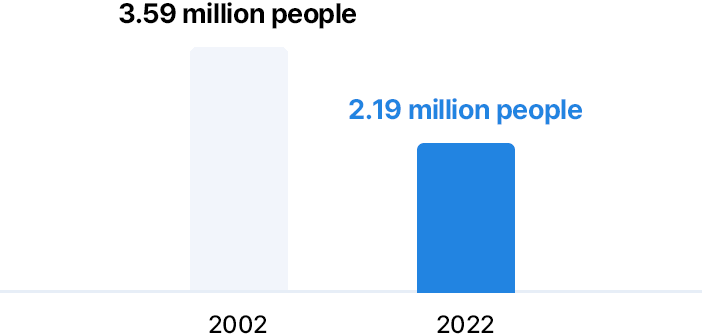
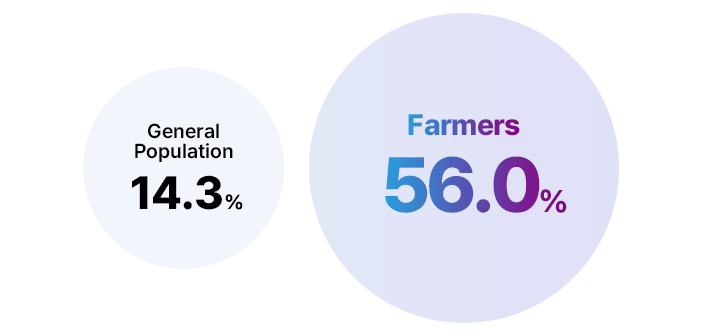
In 2002, Korea’s farming population numbered 3.59 million. By 2022, it had plummeted to 2.19 million, and 56% of remaining farmers are over the age of 65.
This has led to critical labor shortages and declining productivity, leaving Korea ranked 29th out of 32 OECD countries in food security.
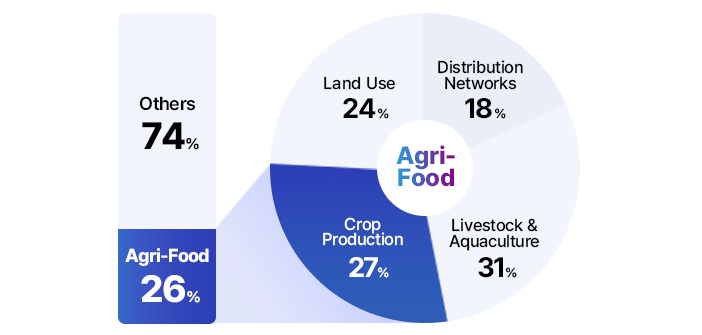
Meanwhile, climate change is worsening agricultural instability. Traditional farming consumes vast amounts of water and accounts for 26% of global greenhouse gas emissions, placing immense pressure on the environment.
Declining Farming Population & Aging Workforce
Korea ranks 29th in food security among 32 OECD countries
Climate Change & Agricultural Burden
26% of global GHG emissions come from the agri-food industry
Agricultural population
Aging rate of people aged 65 and over
Global greenhouse gas emissions ratio
New Possibilities, Clear Limitations
Vertical farming can reduce water usage by up to 95% compared to traditional agriculture,
and significantly cut CO₂ emissions, making it one of the most effective solutions for the climate crisis.
However, conventional vertical farms are often designed around human workflows, resulting in inefficient use of space.
High maintenance costs also make it challenging to secure profitability.
To realize the true future of agriculture, an innovative automated system is essential.
A New Alternative for Agriculture – Vertical Farming
Vertical farms operate in enclosed environments where lighting, nutrients, temperature, and humidity are precisely controlled,
enabling stable, year-round production of crops.
26% of Global Greenhouse Gas Emissions Come from Agri-Food Industries
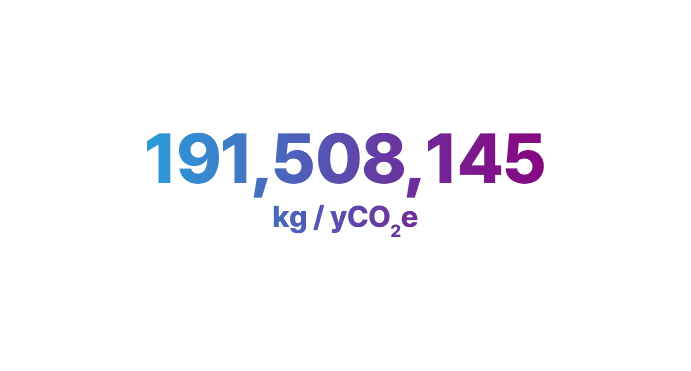
If 30% of domestic vegetables were grown in vertical farms, the reduction in CO₂ emissions would be significant.
Up to 95% Water Savings Compared to Conventional Farming
Water consumption in vertical farms vs. traditional greenhouses.


Need for Automation Systems
Efficient automation systems are required to address the challenges of low productivity and high facility & maintenance costs.
Factors Undermining Profitability in Vertical Farms
Reduced Space Efficiency
Wide aisles are required between cultivation units to allow human workers.
Limited Productivity
Cultivation height is restricted to the level accessible for human labor.
Decreased Profitability
Full-scale automation installations significantly increase facility and maintenance costs.
Rowain’s Innovative Solution
Robotic Vertical Farming System
INTELLI-FARM
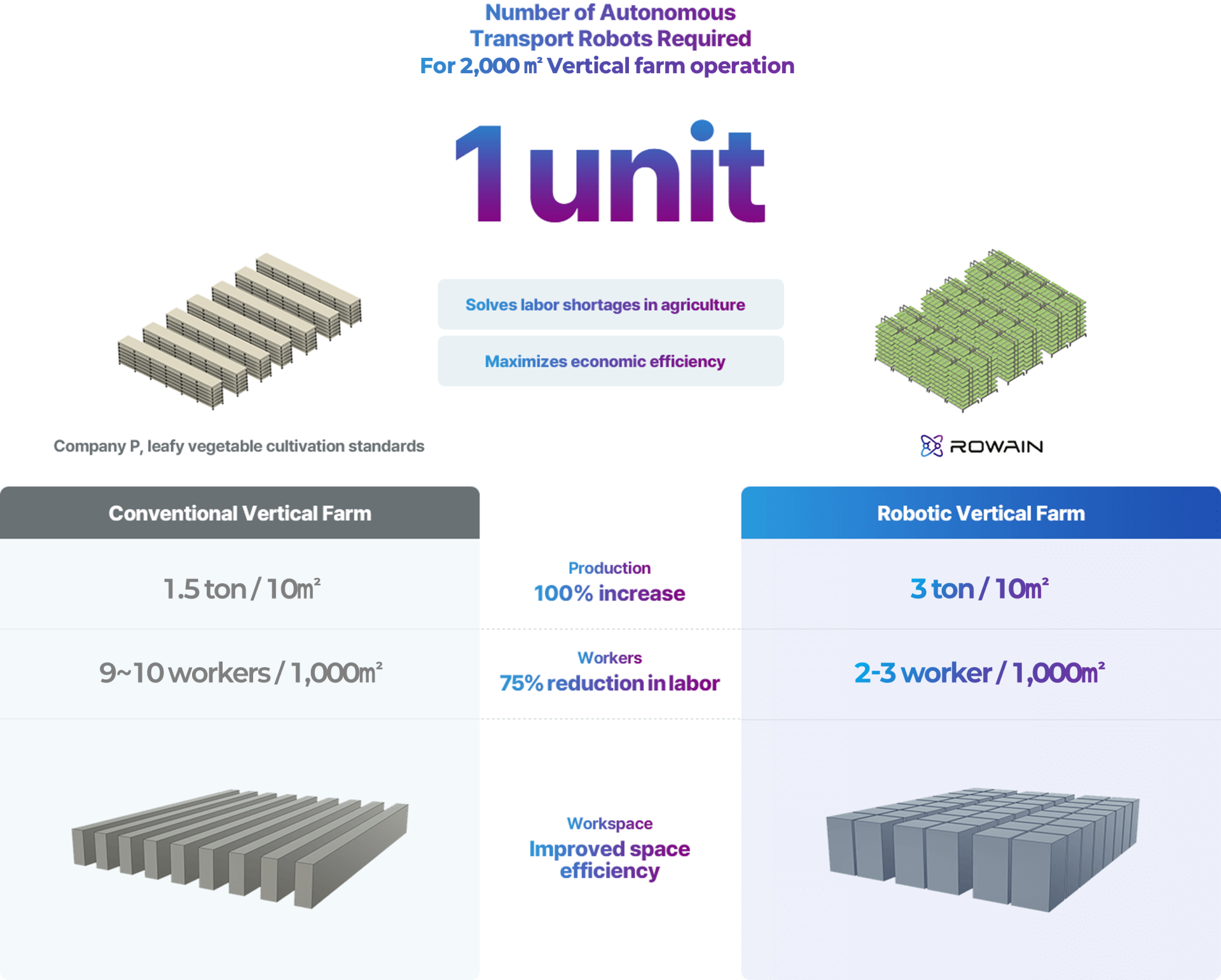
Rowain maximizes efficiency with a new type of fully automated vertical farm.
We solved all the challenges of traditional vertical farming through robot-centered design.
INTELLI-FARM completely separates cultivation space (Vertical Farm) from working space (Working Zone) for optimal performance.
Maximized Production Efficiency, Minimized Labor Input
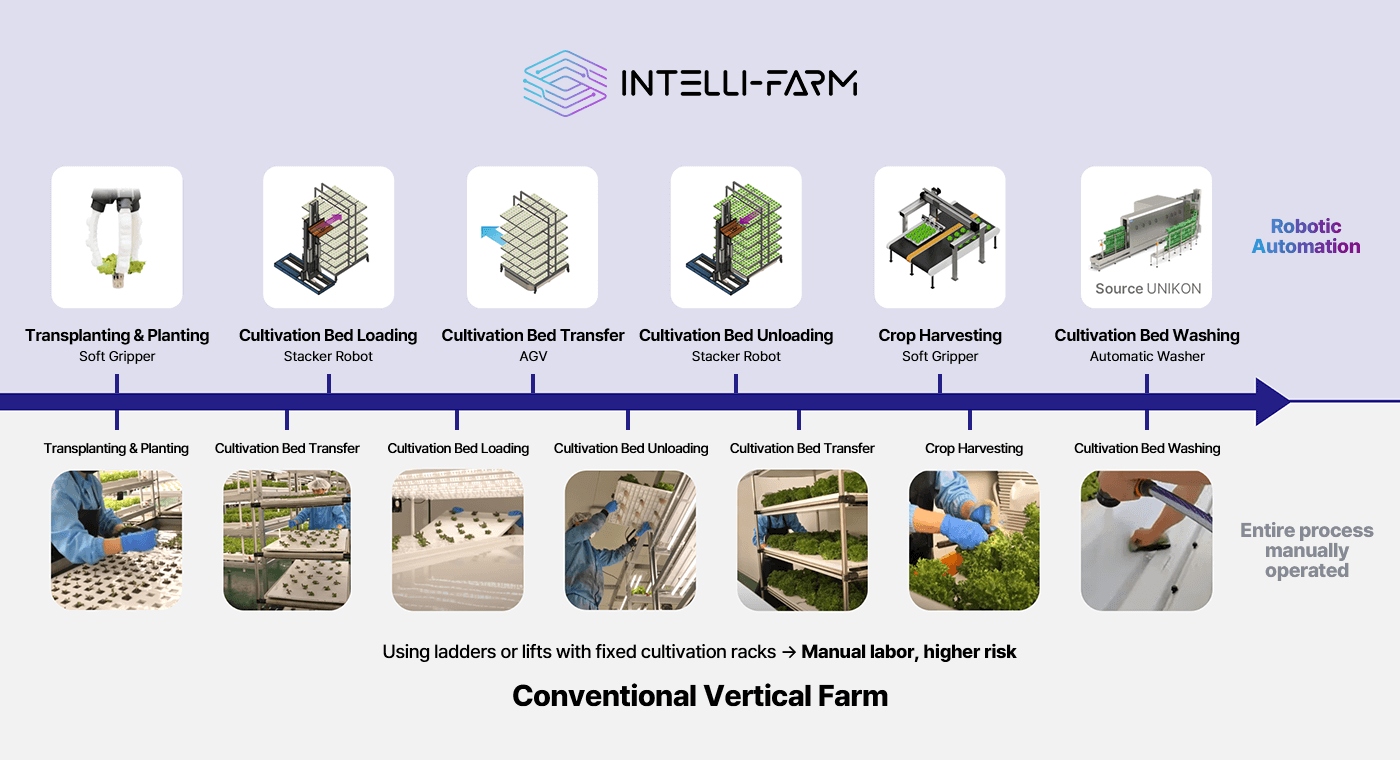
With AGVs, stacker robots, and harvesting robots handling all tasks automatically within the work zone, there is no need for human presence in the cultivation area.
This innovation eliminates wasted space, maximizes planting density to boost production, and significantly reduces fixed costs by removing unnecessary facilities.
Robots Automate Every Step of Production

CEO : Kyeong-Ha Lee Email : rowain@rowain.com
R&D Office : 901, Hyundai Terra Tower A, 13, Sinwon-ro 250beon-gil, Yeongtong-gu, Suwon-si, Korea
Head Office : 303-28, 63, Buldang 36-gil, Seobuk-gu, Cheonan-si, Chungcheongnam-do, Korea
(Buldang-dong, Chungnam Cheonan-Asan Innovation Cluster, Campus 3)
© 2024 ROWAIN. All Rights Reserved.
keyboard_arrow_up
TOP